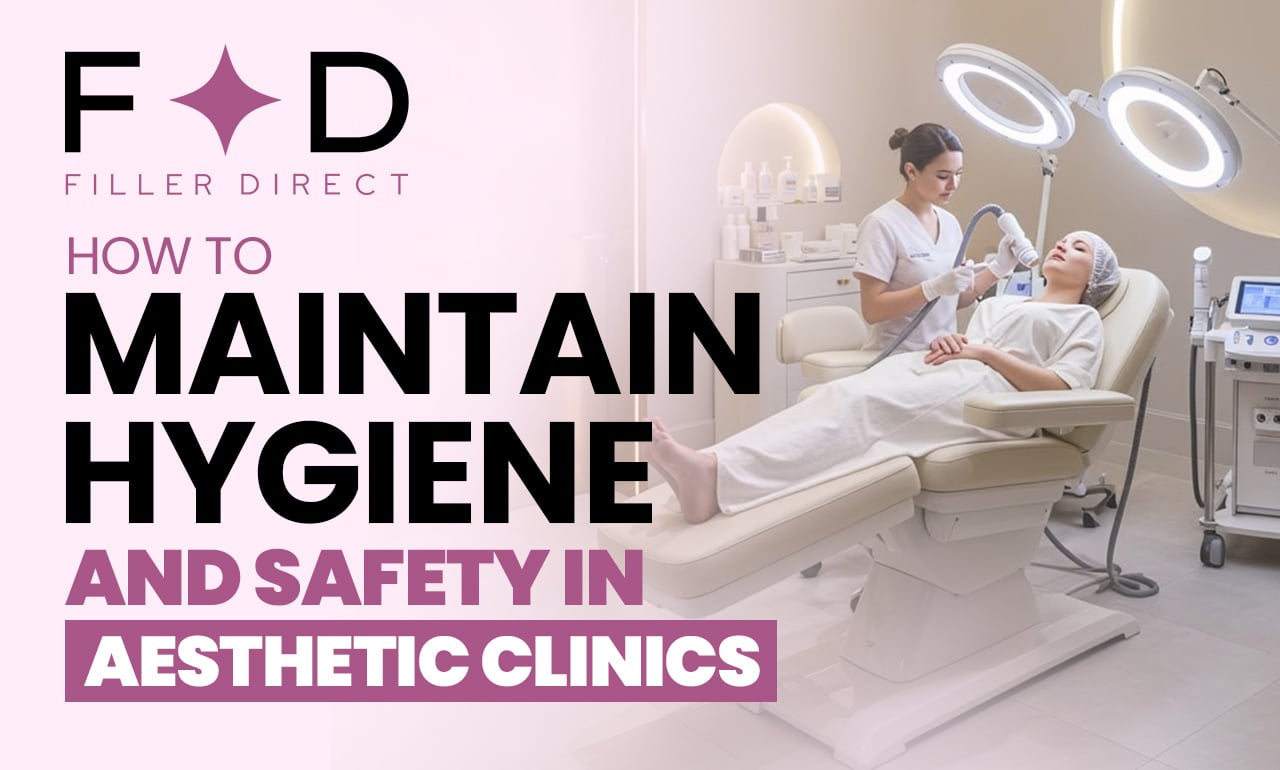
In the world of aesthetic treatments, results often steal the spotlight but hygiene and safety are just as important. Whether it’s a simple anti wrinkle injection or a more advanced dermal filler procedure, ensuring a clean, sterile environment is essential for protecting clients and achieving successful outcomes.
Aesthetic clinics have a duty of care to uphold the highest standards of cleanliness, infection control, and client safety. But what does that really involve? And how can both practitioners and clients ensure these standards are being met?
Here’s a practical guide on how to maintain hygiene and safety in aesthetic clinics.
Start with a Clean and Organised Environment
First impressions matter. A clean, well organised clinic immediately signals professionalism and highlights the importance of safety. The reception area, treatment rooms, and toilets should all be spotless and well maintained. Clutter free surfaces, sanitised equipment, and visible cleaning protocols help create a safe and trustworthy environment for clients.
Daily cleaning schedules should be in place, with particular attention paid to high touch surfaces like door handles, chairs, card machines, and light switches.
Follow Strict Hand Hygiene Protocols
Hand hygiene is one of the most effective ways to prevent the spread of infection. All practitioners must:
- Wash their hands with soap and water before and after every treatment.
- Use alcohol based hand sanitiser throughout the session.
- Wear disposable gloves during all injectable or skin contact procedures.
Clients should also be encouraged to sanitise their hands upon arrival and before entering the treatment room.
Use Sterile Equipment and Single Use Tools
All instruments that come into contact with skin or bodily fluids must be either:
- Single use or Disposable
- Thoroughly sterilised using medical grade autoclaves between each client.
This includes needles, syringes, gloves, cotton pads, and any skin tools used during treatment. Reusing items that are meant for single use can lead to cross contamination and serious health risks.
Maintain a Clean Treatment Surface
Treatment beds, trolleys, and counters must be cleaned with medical grade disinfectants between each appointment. Use disposable bed covers or sanitised linen and change them after every client. Wipe down all equipment, containers, and surfaces that were used during the session.
A thorough clean between clients isn’t just best practice it’s essential to preventing infections and maintaining trust.
Ensure Proper Waste Disposal
Aesthetic treatments often generate clinical waste, such as used needles, gloves, and blood stained materials. These must be disposed of in:
- Sharps bins for needles and blades.
- Yellow clinical waste bags for contaminated items.
Waste must be collected by certified medical waste disposal companies to ensure it’s handled and incinerated safely. Clinics should never dispose of clinical waste in regular bins.
Stay Up to Date with Infection Control Training
Practitioners must receive regular training in infection prevention and hygiene protocols. This includes understanding:
- Cross contamination risks
- Needle stick injury procedures
- Bloodborne pathogen exposure
- Cleaning and disinfection techniques
Many professional bodies and insurers now require ongoing training as part of clinic registration and indemnity policies.
Conduct Thorough Consultations and Medical Screenings
Hygiene isn’t just physical, it starts with safe practices and responsible care. Before beginning any treatment, clinics must:
- Take a detailed medical history
- Discuss any allergies, skin sensitivities, or underlying conditions
- Confirm whether the client is pregnant, breastfeeding, or on medication
This helps reduce the risk of adverse reactions and ensures the right protocols are followed for each individual.
Use Sealed, Licensed Products
All products used in the clinic should be:
- Purchased from licensed, reputable suppliers
- Clearly labelled with expiry dates
- Stored according to manufacturer instructions (e.g., refrigeration if needed)
Using unregulated or expired products is unsafe and unethical. Clients should feel confident asking where their injectables or skincare products are sourced from.
Wear Protective Clothing and PPE
Practitioners should always wear appropriate PPE (personal protective equipment), especially during procedures involving needles or close face to face contact. This includes:
- Disposable gloves
- Face masks or visors
- Protective aprons or uniforms
This not only protects the practitioner but also helps clients feel safe during their treatment.
Encourage Honest Client Feedback
Clients are often the first to spot something that might be missed whether it’s a dusty surface or a bin that hasn’t been emptied. Clinics should make it easy for clients to give feedback and act on it promptly.
Clear communication, follow up messages, and satisfaction surveys all help keep hygiene and safety a shared responsibility.
Also read: Tips to keep your skin hydrated and glowing
Final Thoughts
In the aesthetic industry, cleanliness and safety aren’t optional they’re fundamental. A well maintained clinic reflects the professionalism and ethical standards of the practitioner, while also building client trust and loyalty. From regular hand hygiene and sterile tools to proper waste disposal and PPE, every detail matters.
For clients, knowing what to look for when choosing an aesthetic clinic is just as important as the treatment itself. Always ask questions, trust your instincts, and choose a clinic that prioritises your health as much as your appearance.


