

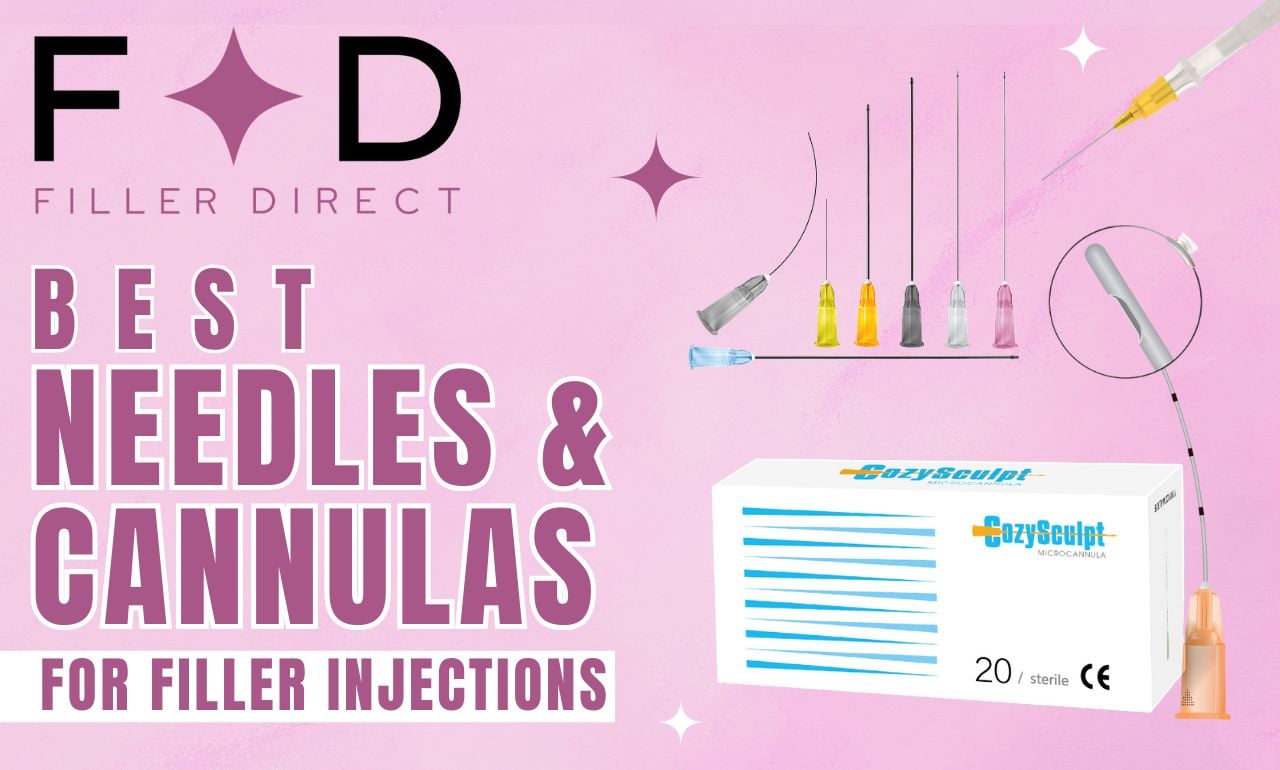
When we supply dermal fillers to clinics across the UK, one thing we always emphasise is the importance of using the right needles and cannulas. The quality of these tools has a direct impact on precision, comfort, and overall treatment outcomes. As a wholesale aesthetic supplier, we’ve worked closely with practitioners for many years, and we understand exactly what they look for when choosing the correct gauge, length, or tip for a procedure.
In this guide, we’re sharing the sizes and styles that most professionals rely on for dermal filler injections, along with what we recommend when clinics restock in bulk.
Why Choosing the Right Needle or Cannula Matters
A filler treatment is never just about the product being injected. The delivery tool plays just as important a role. The wrong needle or cannula can create unnecessary trauma, cause more bruising, or make precision difficult. The right one, on the other hand, improves comfort, enhances control, and helps practitioners achieve the smooth, balanced results their clients expect.
This is why clinics tend to stock a full range of sizes. It gives them the flexibility to adapt to different areas of the face, varied client anatomy, and the viscosity of the filler they’re working with.
Needles vs Cannulas: How Professionals Decide
When Needles Are Used
Needles are typically chosen for more precise placements. Professionals reach for them when they need sharp definition, such as:
- Creating detailed lip borders
- Adding small boluses of filler
- Working at specific depths
- Performing entry points for cannula treatments
A needle gives direct, highly controlled access to the exact plane the injector is targeting.
When Cannulas Are Used?
Cannulas are preferred for many contouring and low-trauma injections. They move through tissue more gently and reduce the chance of bruising. Practitioners use cannulas for:
- Tear troughs
- Cheek contouring
- Jawline enhancement
- Mid-face volume
- Areas with higher vascular risk
Because cannulas glide more smoothly, clients generally experience less discomfort and less downtime.
Common Needle Sizes Used for Dermal Fillers
Based on what clinics across the UK order from us, these are the needle sizes professionals rely on most:
Lips
For lip augmentation and border definition, 30G or 32G needles are widely used. These sizes allow for smooth entry and controlled placement while keeping discomfort to a minimum.
Nasolabial Folds
For deeper lines, practitioners tend to use 27G or 30G needles. These gauges offer enough strength to reach the correct depth while still providing precision.
Chin & Jawline
Structural fillers require a stronger needle. 27G is the preferred option for shaping and contouring areas where stability is important.
Fine Detailing
For small refinements or micro-droplet techniques, clinics usually keep 32G needles in their kits. These are ideal for delicate finishing touches.
Common Cannula Sizes Used for Dermal Fillers
Cannulas vary by treatment zone, and here are the sizes that are most frequently used by practitioners:
Cheeks
A 25G or 27G cannula, typically 38mm–50mm, provides the reach and smooth flow required for cheek volume and mid-face contouring.
Tear Troughs
For safer treatment around the under-eye area, 25G or 27G (38mm) cannulas are a popular choice. They minimise trauma and reduce the risk of bruising.
Jawline & Chin
For strong definition and sculpting, clinics often use 22G or 25G cannulas. These gauges work well with thicker fillers and allow steady, controlled movement.
General Mid-Face
A versatile option is a 25G–27G cannula, suitable for most mid-face volume and soft-tissue work.
What We Recommend Clinics Look For in Quality Needles & Cannulas
Because these tools directly impact treatment results, we encourage clinics to prioritise quality. The best needles and cannulas share the following features:
- Smooth coating for comfortable insertion
- Strong, medical-grade steel
- Secure, stable hubs
- CE-marked, fully sterile packaging
- Reliable manufacturing standards
- Consistent performance across batches
A high-quality tool helps practitioners work more confidently, more safely, and more efficiently.
How Professionals Choose Between Needle and Cannula
From what we’ve seen across thousands of clinic orders, practitioners consider several factors before choosing their tool:
- Tissue thickness – deeper or firmer areas may need a stronger gauge
- Type of filler – thicker gels often require a wider gauge or cannula
- Desired placement depth – surface hydration vs structural contouring
- Client comfort – cannulas often offer gentler treatments
- Anatomical risk zones – areas with more vessels are safer with a cannula
No single tool works for every face. This is why clinics always keep multiple gauges and lengths available.
Key Tips We Share with Clinics Ordering in Bulk
After supplying thousands of orders to aesthetic practices, these are the most consistent pieces of advice we offer:
- Always keep a variety of gauges in stock
- Replace needles frequently during treatments
- Do not reuse entry points across different areas
- Match the tool to the viscosity of the filler
- Choose CE-marked, sterile products only
- Order in advance to avoid low-stock treatment days
A well-organised stockroom ensures smoother, safer, and more reliable treatments.
You may like to read: Bulk buying PDO Threads: A smart move for clinics
Final Thoughts
Choosing the right needle or cannula is just as important as choosing the right filler. The correct tool improves accuracy, reduces trauma, enhances comfort, and supports better overall results. As a wholesale supplier, we make sure clinics have access to reliable, high-quality, CE-marked tools at competitive prices, so they can carry out every treatment with confidence.
Whether a practitioner prefers fine needles for precision or blunt-tip cannulas for safer contouring, we keep a full selection available to help clinics stay fully equipped at all times.


